C’era un luogo, poco distante dal rumore del presente, dove il tempo non scorre: si deposita.
Si stratifica come sabbia portata dal vento, come sale sulle labbra, come memoria nelle pieghe della terra. Il Parco della Maremma, o dei Monti dell’Uccellina, che l’anno scorso ha compiuto 50 anni, dove ogni sentiero non è solo un cammino, ma una soglia.
When the land was sea
Qui, prima di tutto, c’era il mare. O meglio: c’era il fondo del mare.
Cinque milioni di anni fa queste colline erano fondali emersi lentamente, diventati isole, poi terraferma. Camminare qui significa attraversare una geografia antica, dove la roccia racconta ancora la sua origine sommersa.
Le prime presenze: uomini e silenzi
E poi venne l’uomo. Non subito, senza fretta.
Le prime presenze nel parco della Maremma sono quelle dei Neanderthal, nelle grotte affacciate su un paesaggio diverso, più aperto, più primordiale. Da allora, nessuno ha mai davvero posseduto questa terra: l’ha solo attraversata.
Etruscans and Romans in the Maremma Park: light traces
Gli Etruschi lasciarono tracce leggere, i Romani costruirono ville e strade lungo il corso dell’Ombrone. Ma fu nel Medioevo che la Maremma divenne davvero una terra di confine: paludi, malaria, silenzi. Gli uomini si ritirarono sulle alture, lasciando alla natura il suo spazio.
The coastal towers still stand like sentinels today. Stone eyes turned to the sea. And among these stones lives a story that seems unending.
The Legend of Bella Marsilia
La leggenda della Bella Marsilia, figura sospesa tra realtà e racconto, che ancora sembra abitare i ruderi battuti dal vento. Qui, più che altrove, le storie non si chiudono: restano.
Quando arrivarono i Medici, tentarono di addomesticare questa terra. Bonifiche, strade, ordine. Ma la Maremma non si lascia mai completamente trasformare. Rimase ciò che è ancora oggi: un equilibrio fragile, mai definitivo, tra uomo e natura.
E’ forse questo il segreto del Parco della Maremma.
Never having been fully conquered.
A landscape that breathes
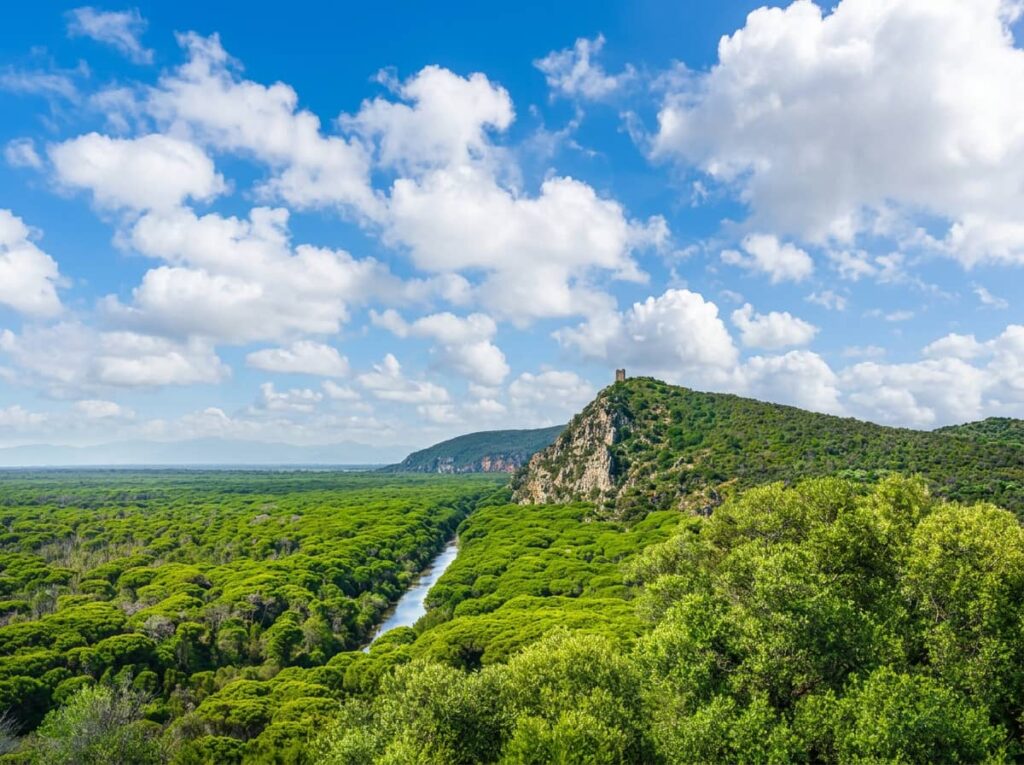
Camminando nel Parco della Maremma, tra pinete resinose, macchia mediterranea e spiagge silenziose, si percepisce una continuità rara: ogni elemento è parte di una storia più grande, che non ha bisogno di essere spiegata. Guardarsi intorno, qui, non è un gesto distratto. E’ un modo per riconoscere che le colline erano mare, che le torri erano paura, che i sentieri sono memoria. E che tutto, ancora, respira.
The Park that tells its story
Anche nel 2026, il Parco non è solo da attraversare: è da vivere, lentamente, attraverso esperienze che uniscono natura, cultura e scoperta.
The calendar unfolds like its paths, unhurriedly, following the rhythm of the seasons. In spring, when the light returns to spread over the hills, paths of knowledge and immersion open up:
- excursions dedicated to fragile ecosystems, such as coastal dunes, to understand their value and delicacy
- days of naturalistic drawing among ruins and landscapes, where observation becomes a creative act
- traversate dell’Uccellina, veri viaggi a piedi dentro l’anima del Parco
Alongside nature, there is also space for music and culture:
- symphonic concerts and musical reviews in the heart of the Park, where sound dialogues with the landscape
- meetings dedicated to the history of plants and the territory, like small journeys through time
Con l’arrivo di aprile, il passo si allunga verso il mare:
- escursioni guidate a Cala di Forno, tra pinete e falesie, fino a una delle spiagge più intatte della costa
- experiences that combine walking and local flavours, such as the routes between Talamone and its traditions
And then there are events that are almost rites:
- days dedicated to the coastal towers, where history returns to being landscape
- slow, accompanied walks, in which every step becomes a story
Non è un calendario da riempire. E’ un invito.
A scegliere un giorno, un sentiero, una stagione e lasciare che sia il Parco a fare il resto. Perchè in Maremma, anche gli eventi non interrompono il silenzio: lo accompagnano.